Findings from animals and cells
KPV peptide has only been tested in animals and cells
KPV is a small piece of a hormone. Here's what changed in mice, rabbit eyes, and cells kept in dishes.
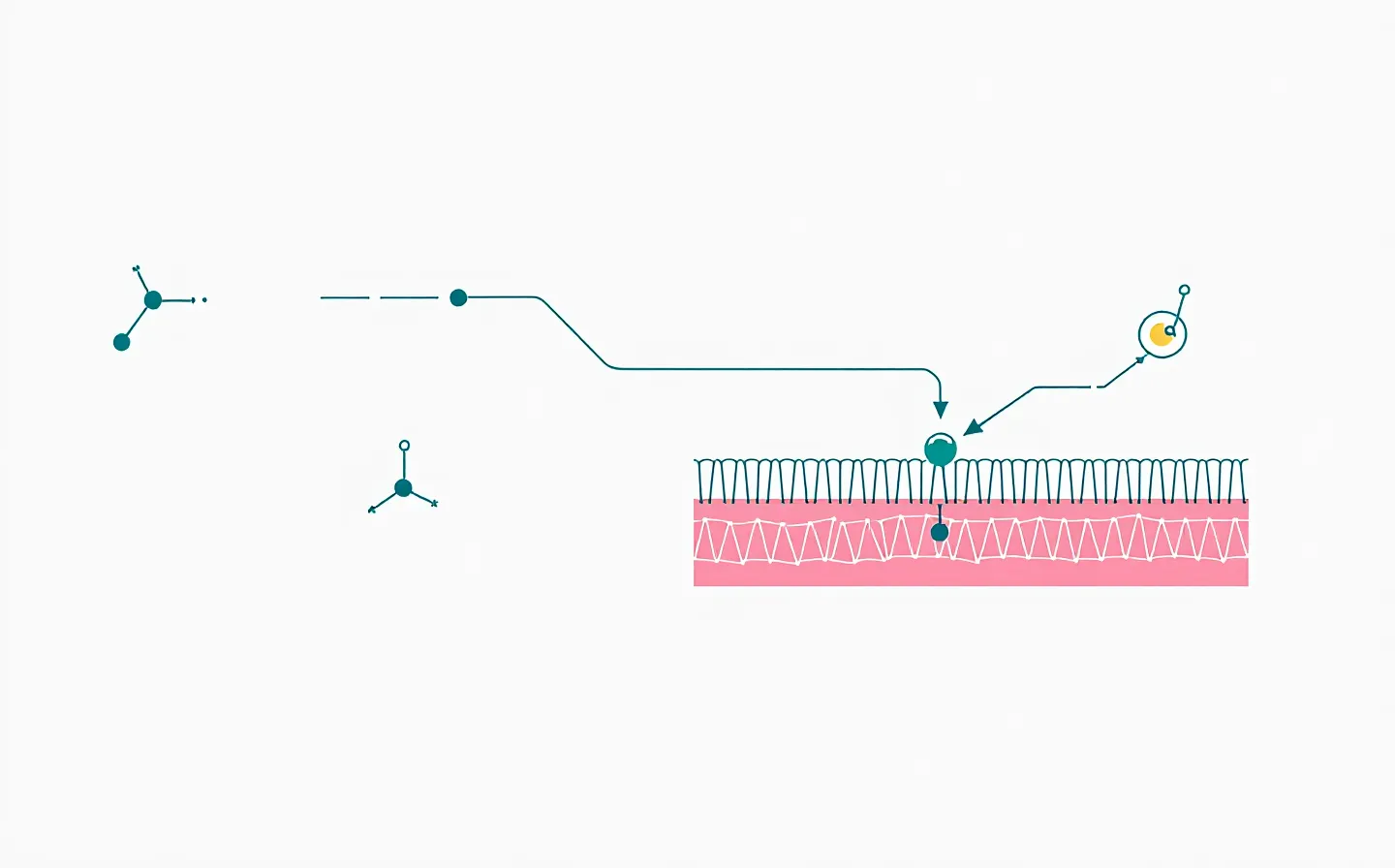
KPV has not been tested in people
What is KPV peptide? It is a row of three tiny protein parts.
Scientists call each part an amino acid. The names lysine, proline, and valine identify those parts.
Scientists cut KPV from one of the body's hormones. The full hormone helps calm swelling and color skin.
KPV kept the swelling effect in early tests. It didn't cause the same skin-color change.
Swelling signs fell in mice and cells given KPV. No study has tested KPV's safety, benefit, dose, or timing for you.
Supply firms sell KPV for lab research. That label isn't proof KPV is safe when you take it.
KPV kept one job of the longer hormone
KPV is cut from positions 11 through 13 in a hormone chain [1]. Those numbers mark three spots in the longer hormone.
Researchers tested the small piece apart from the hormone [4]. It still calmed swelling but didn't darken skin [4].
At 10 nanomolar, a trace amount mixed through liquid, KPV changed how cells reacted. Gut and immune cells released less material that stirs swelling [1].
The tests measured those cell changes in dishes. They didn't measure pain or healing in you.
Some mice lacked a cell part that answers the full hormone [2]. Scientists call it type 1, and KPV still eased swelling in those mice.
That finding ruled out one expected cause. It didn't show which other cause was at work.
KPV peptide helped mouse bowels and rabbit eyes
Mouse gut studies gave the clearest KPV result. Two lab chemicals made the mouse bowel sore and swollen [1].
Mice given KPV recovered sooner and regained more weight [2]. Their colon tissue showed less swelling and fewer white blood cells.
Cells in the bowel wall carry small protein parts inside [1]. Sore patches had more of these carriers.
The rabbit-eye result had a firm count. By 60 hours, all 8 of 8 KPV-treated wounds had closed [6].
No placebo wound had closed by then. A broad review found animal work on skin, eyes, and organs [4].
You can read the mouse and eye findings in full. The numbered sources show which paper supports each claim.
Lysine-Proline-Valine names KPV's three parts
Lysine-Proline-Valine is KPV's full name. Each name is an amino acid, a small unit that forms protein [4].
KPV is a short chain of those three parts. The lab formulas don't help explain what KPV did in a mouse.
Scientists cut KPV from one end of a longer hormone [4]. KPV isn't a hormone that travels through your body by itself.
Uncovered KPV may break apart fast. Newer studies put KPV in soft coverings for the gut.
Read what happened after animals swallowed KPV. The KPV law page explains why FDA hasn't approved KPV as a drug.
The next page depends on your question
Start with what happened in mouse colitis. You'll see the changes found in animals and cells.
Then read what happened after KPV was swallowed. That page explains why KPV may break apart in the gut.
The dose page lists only dish and animal amounts. No human dose appears there.
The FDA page explains the pharmacy rules. The question page gives short answers tied to sources.
KPV peptide is a small piece of a hormone
KPV has three joined parts called amino acids. Those are small parts the body uses to build protein [4].
The small piece calmed signs of swelling. Cells and mice also showed less material that feeds swelling [1].
KPV peptide lowered swelling signs in early tests
Cells in dishes released less material that feeds swelling [1]. Gut-wall cells also pulled more KPV inside [1].
KPV helped mice missing a cell part that responds to the longer hormone [2]. The study ruled out that cell part as the only cause.
KPV peptide remains an early lab subject
Scientists tested KPV in sore bowels, eye wounds, and skin cells [4]. Mouse colitis drew the most work [1].
These tests aren't approved care. People haven't been checked for the same effects or harms.
KPV joins three small protein parts
KPV is short for lysine-proline-valine. Those are three amino acids, or small parts used to build protein [4].
The three parts come from one end of a longer hormone. Lab formulas don't explain how KPV acts in a body.
Mouse colitis drew the most KPV work
KPV helps scientists study swelling in the bowel wall [1]. Two lab chemicals gave mice different forms of colitis.
KPV by mouth made both forms less severe [1]. That result hasn't been checked in people.
KPV kept the hormone's swelling effect
KPV comes from one end of a natural body hormone [4]. It kept part of the hormone's swelling-calming effect.
KPV didn't cause the same skin-color change. That difference is why scientists study the small piece [4].